Company Brain
A Company Brain for everything your business
needs to know.
Connect documented knowledge and live business systems into one Company Brain, giving employees, assistants and AI agents a trusted single source of truth.
Or see how it works first. No form.
- Company knowledge in one context layer
- Live data from connected systems
- Permissions inherited from your tools
- Shared context for every AI agent


 HubSpot 571 deals
 Jira 1,200 tickets
 Personio 759 requests
Companies already building with Growy







Problem → Solution
Company knowledge is useful only when people can find and trust it.
Most organizations already have the information they need. The problem is that it is split across SOPs, manuals, shared drives, inboxes, business applications and individual teams. A Company Brain connects those sources so an employee does not have to know which folder, tool or colleague holds the answer before asking the question.
Before
Scattered company knowledge
After
Connected company context
3,000+ integrations
Connect the systems behind your Company Brain.
We connect 3,000+ integrations across the tools you already use, alongside the documents you upload directly. The Company Brain can combine procedures and policies with live information from systems such as CRM, ERP, email, spreadsheets and HR or payroll software. Connected systems remain in place, and authenticated access determines what the platform can read or write.












Showing 24 of 98 listed · tap up to 3 to see them work together.
98 of the most-requested tools are listed here. Growy connects to 3,000+, anything with an API, plus custom endpoints. See how connections work or ask about yours.
Pick a tool above to see a real operational example built on it.
What it covers
The core capabilities of a useful Company Brain.
A Company Brain connects knowledge, search, permissions and agent context. Growy's integrations connect that context to the systems where work happens, without requiring teams to replace existing tools.

Deep dive · live page
Knowledge management system →
SOPs, policies and manuals are connected by a knowledge management system, so people and agents can find and use current company knowledge. On a shop floor that becomes the knowledge support agent, where a routine question used to take twenty-five minutes and four emails.

Deep dive · live page
Connected integrations →
Connect company knowledge with the systems where current data lives, so people and agents can work with context instead of checking each tool separately. Pointed outward, the same pattern becomes a price intelligence agent that sweeps competitor pricing overnight.
Explore · Company knowledge
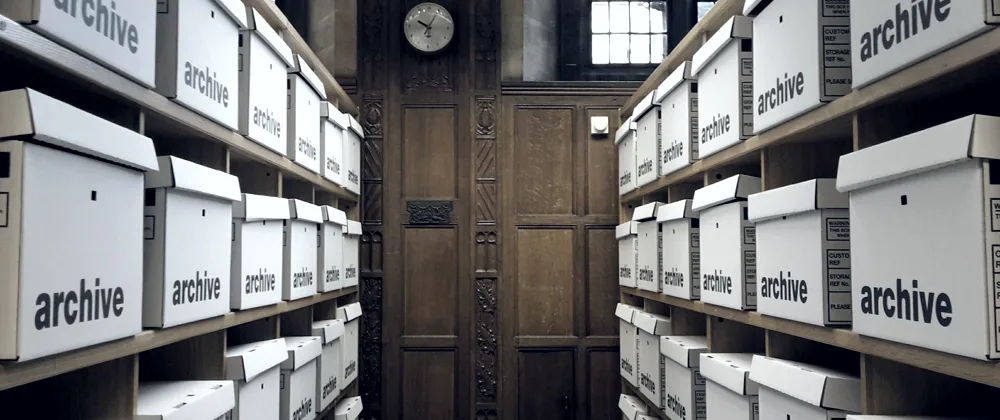
SOPs and company knowledge →
Procedures only stay useful when teams can find, maintain and apply them in day-to-day work, which is what the company knowledge and SOP section explores. Where a procedure has to run rather than merely be readable, the case is the onboarding agent.

Explore · Company Brain
Company Brain in practice →
The Company Brain library covers practical questions around connected knowledge, context and AI-enabled work.
How it works
How a Company Brain is built and used.
We combine your documents with authenticated software integrations, then put that connected context in front of your people and your agents. The implementation can start with a narrow set of high-value sources and expand as real questions reveal what knowledge is still missing.
Step 01
Connect documents and systems.
Start with the sources that already contain the operating knowledge of the business. SOPs, manuals, procedures, policies and process maps can be uploaded directly. We can also connect 3,000+ integrations, including CRM, ERP, inboxes, spreadsheets and HR or payroll systems. Those integrations can query live information and, when an agent is authorised to do so, act inside the connected system. This creates a connected layer without asking the company to replace the software it already runs.
 Notion
 Google Drive
 Slack
Slack ConfluenceHubSpot
 Google Sheets
Documents plus 3,000+ integrations
Step 02
Build searchable company context.
Once sources are connected, the Company Brain makes relevant knowledge available as context for search, assistants and agents. What matters is the result rather than the plumbing: company procedures sit alongside live system information, and the same permission boundaries that apply in your existing tools continue to apply here. When the answer is not there, the gap is logged and the missing SOP or document is flagged for the business to add.
Step 03
Answer questions and support agent actions.
Employees can ask questions against the connected knowledge instead of searching each source separately. AI assistants can answer using real company material, and agents can use the same Company Brain when deciding what to do next. When live data is needed, the agent can query the connected system rather than rely on a stale export. This shared context helps a support answer, an operational decision and a follow-up action reflect the same underlying company facts.
Interactive demo
Inside the Company Brain.
A Company Brain becomes useful when connected knowledge can be searched, gaps can be surfaced and agents can reuse the same context. The interface can show what sources are connected, which questions are being asked and where missing documentation needs attention.
LIVE DASHBOARD
What the Company Brain sees today.
Agent interactions
2 367
+20% (7d)
Active users
23
32 total users
Pending approvals
2
In review queue
Total courses
42
Available to learners
Most active users
Based on activity this week
- Jane DoeStore manager66.4
- John HongAdmin manager54.0
- John DoeSales person46.0
- Florence FrewySales manager43.1
- Leo DuboisEmployee29.9
Most used agents
Five top-performing agents by engagement
- Competitor Agent1 123 runs
- Salary Agent860 runs
- Leave Agent670 runs
- Budget Agent601 runs
- OCR Agent347 runs
Seen enough? Bring us the question your team asks most.
Case study
150+ procedures and 25,000 SKUs, answerable from the shop floor.
A multi-brand fashion retail franchise gives the clearest publishable example of scattered operating knowledge becoming a single permission-aware source.
“150+ operating procedures existed only as static documents, and a 25,000-SKU catalogue lived somewhere else again. Shop floor and back office asked the same questions over and over, which is what actually consumed the departments' time.”
Challenge
More than 150 operating procedures existed only as static documents, and the 25,000-SKU product catalogue lived somewhere else again. Staff on the shop floor and in the back office asked the same questions over and over, and answering them consumed the time of the departments that held the knowledge.
Solution
Every SOP, manual, procedure and the full product catalogue were centralised in the Company Brain, behind an agent that respects each employee's own permissions. Instead of searching through paperwork, staff across eleven-plus stores get an answer around the clock, from the same source the departments already maintain.
Results
150+
SOPs and procedures centralised
25,000+
SKUs in the answerable catalogue
No before-and-after was instrumented on this deployment, so there is no percentage to quote here. What is measurable is the coverage: 150+ procedures and a 25,000-SKU catalogue, answerable by 250+ employees across 11+ stores, each under their own permissions.
FAQ
Questions, answered.
The practical questions companies ask when evaluating a Company Brain as a knowledge, search and AI context layer.
What is a Company Brain?
Does a Company Brain replace our knowledge base or business systems?
Which data sources can a Company Brain connect?
How are permissions handled?
How does a Company Brain get better over time?
Reviews
What the customer case shows in practice.
The published evidence is strongest when it stays tied to a measured customer outcome rather than generic platform claims.
Self-service
Self-service resolution went from 72% to 87%
Employee questions resolved without a person rose fifteen points over the engagement, as the gaps the agent could not answer were logged and the missing procedures written.
Onboarding load
56+ onboarding steps rebuilt as six workflows
Once a candidate was hired, onboarding opened a separate and heavier process: contracts, documents and the same information entered again and again. Document collection, submission and triage now run across departments on their own.
Quote turnaround
Quotes went from 48 hours to minutes
Sixty-plus quotation requests a day against a team that could not keep up, and no additional resource to be found. Turnaround dropped to minutes, and the business stopped losing clients and market share to the wait.
More about Company Brain
What is a Company Brain?
A Company Brain turns scattered company knowledge into context people and AI can actually use. Instead of keeping SOPs, policies, manuals and process maps in isolated repositories, it connects documented knowledge with the live systems where work happens. In Growy, teams can upload this material directly and connect authenticated data from more than 3,000 integrations. Employees can then search that knowledge in natural language, while AI assistants and agents use the same context in their work. A document store helps someone find a file. A Company Brain helps them understand what the company knows about a situation and which current data is relevant. Keeping a procedure current, owned and retired on time rather than merely stored is the part of that layer called SOP management.
How does a Company Brain work with AI?
A Company Brain connects useful sources, makes their context searchable and lets authorised agents use that context when they act. Those sources can include documents as well as live systems such as CRM, ERP, inboxes, spreadsheets or HR software. AI sits in the access and reasoning layer rather than replacing the source of record. An assistant can answer from company material, while an agent can combine that knowledge with current system data and continue a workflow through connected tools. Access still follows permissions: we inherit the role-based controls your systems already enforce. When an answer is missing, the platform can log the gap and identify which SOP or document needs attention. That gives teams a way to improve the Company Brain through day-to-day use.
How do you build a Company Brain?
Build a Company Brain around a business problem, not a request to connect everything at once. Start with the questions or workflows where scattered knowledge creates delays, then connect the documents and systems that matter. Define which sources are authoritative, who can access them and which actions an agent is allowed to take. Test the experience with team questions and use missing answers to reveal gaps in documentation. Once the initial knowledge layer is reliable, extend it to assistants and AI agents that need the same context. One of our customers, a multi-brand fashion retail franchise, worked in exactly that order: more than 150 operating procedures and a 25,000-SKU catalogue centralised first, then opened to eleven stores behind an agent that respects each employee's own permissions. The aim is a trusted layer that improves through use.
Which Company Brain features matter most?
Useful Company Brain software should connect knowledge with live company data, support natural-language search, preserve access controls and give AI agents the context they need. It should make missing information visible rather than presenting incomplete knowledge as certain. Harder questions often concern governance: which source is authoritative, who owns each procedure and how permissions are maintained. We inherit permissions and log the gap whenever an answer is missing. A Company Brain works best as an operating layer connecting knowledge management, enterprise search and AI agents, not as another standalone wiki.
Team
The people building Growy.
We combine product and operations work around a practical question: how can company knowledge become usable context for the people and agents doing the work? The platform is built around connected systems, governed access and workflows that can be tested against real operations.





Get started
Build a Company Brain around the knowledge you already have.
Start with the SOPs, documents and live systems behind one high-value question or workflow, then expand from real usage.
Two ways to start
Book a demo6 FIELDSYou already know what you want to see. Tell us the essentials and we come back with times.Open the form →Build your agent6 QUESTIONSYou want the demo built around your own bottleneck. Answer six questions, we prepare the agent for the call.Start the questionnaire →Prefer a live call?
Grab a slot that suits you.
Book a 30-minute call with our team.
Opens the calendar over this page. Hosted by Calendly, which sets its own cookies.